
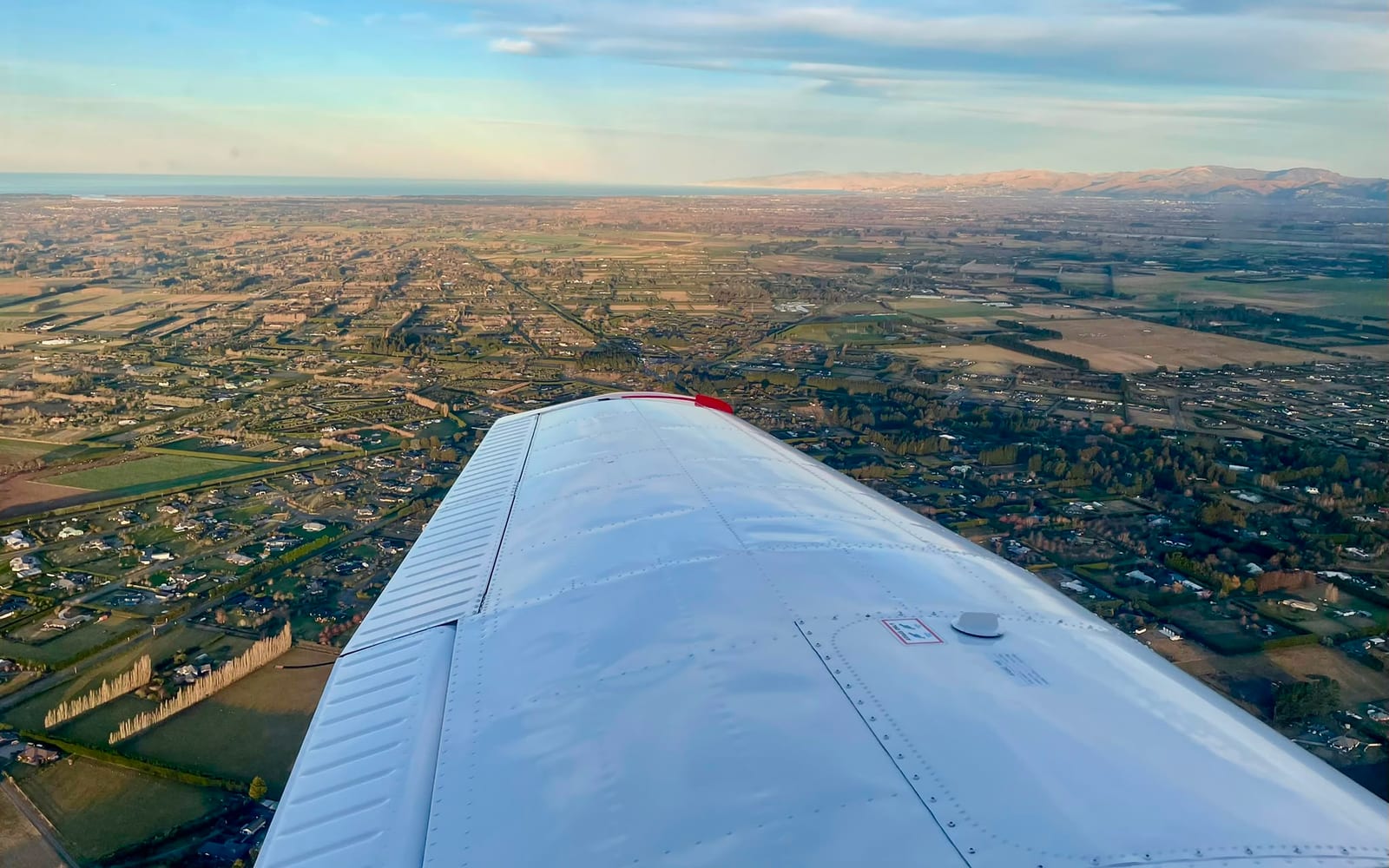
Starting flight training is exciting, but the first few lessons can also feel surprisingly intense. You may only be learning something relatively simple — how to hold an attitude, make a turn or maintain an altitude — but at the same time you are listening to your instructor, looking outside, trying to understand the instruments, hearing radio calls and getting used to an unfamiliar aeroplane.
Less than two years ago, I was at the beginning of that process myself. One of the things I understand much better now is that you do not need to turn up already knowing how to fly — that is what the training is for — but there is a big difference between learning a completely new concept in the aircraft and applying something that is already familiar.
The more of the basic knowledge you can get to grips with before you fly, the more useful your time in the aeroplane can become.
There is a reason theory comes before — or alongside — flying
On structured flight-training programmes, it is common for students to complete at least some PPL theory before they get very far into the flying programme. That is not just about passing exams.
Imagine an instructor explaining why the altimeter is behaving a certain way while you are also trying to hold altitude, keep the wings level and look for other traffic. If terms such as QNH, controlled airspace, circuit direction or radio calls are completely new, you are trying to learn the underlying theory and the practical skill at the same time.
If you have already seen those ideas on the ground, the explanation in the aircraft has somewhere to attach.
You do not need expert knowledge. Even basic familiarity makes a difference.
Learn the language before you need to use it
Aviation has a lot of terminology, and in the beginning it can sometimes feel as though everyone around you is speaking a different language.
You may hear your instructor talk about attitudes, trim, QNH, downwind, base, mixture, carb heat, controlled airspace or joining procedures. Individually, none of these concepts is particularly impossible to learn, but hearing several of them while you are also flying an aircraft can quickly overload your attention.
Spending some time before your first lessons becoming familiar with common aviation terms means you can concentrate more on what your instructor is actually teaching rather than trying to decode every sentence.
The same applies to Flight Radio. Nobody expects a new student to produce polished radio calls immediately, but understanding the basic shape of a transmission and recognising common phrases makes the radio much less intimidating once you hear it in the aircraft.
Air Law is more practical than it first appears
Air Law can look like a subject full of rules to memorise for an exam, but quite a lot of it quickly becomes relevant in the aircraft.
Airspace, right-of-way rules, circuit procedures, minimum heights, documents, aerodrome markings and basic operating rules all start to make much more sense once you see them being used.
Learning some of this beforehand means that when your instructor points something out in flight, you are reinforcing an idea rather than meeting it for the first time.
That is one reason Aviate starts with short lessons rather than expecting you to sit down and work through an enormous textbook in one go. You can begin building a little aviation knowledge before training starts, then keep adding to it as the flying gives that knowledge context.
Do not try to teach yourself how to fly
There is an important distinction here.
Learning the knowledge around flying before your first lesson is useful. Trying to teach yourself the actual flying exercises is much less useful.
Your instructor will teach you how the aircraft should be operated, what to look for, the sequence of each exercise and the standards expected by your training organisation. You do not need to memorise somebody else’s version of the perfect circuit or spend hours trying to learn control movements from a YouTube video.
In some cases, arriving with a rigid idea of how something “should” be done can actually give your instructor something to unteach.
The useful preparation is broader: understand the terminology, start learning the rules, recognise the basic radio structure and build enough background knowledge that the lesson itself is not full of completely unfamiliar concepts.
Expect the aircraft to make simple things difficult
One of the strange things about early flight training is how much harder everything becomes once the engine is running.
Something you understood perfectly well in a briefing can suddenly disappear from your brain. Your instructor may have explained exactly what you are going to do, and a few minutes later you may struggle to remember the next step.
That is normal workload.
Flying the aircraft itself is consuming a large amount of your attention because none of it is automatic yet. The more familiar the supporting knowledge is, the less mental capacity you have to spend working out what a word means or trying to remember a basic rule.
Over time, controlling the aircraft becomes easier and you have more attention available for navigation, radio, checks and decision-making. But during the early lessons, reducing unnecessary novelty really helps.
What should you actually do before lesson one?
You do not need to spend the weeks before flight school studying every waking hour.
I would concentrate on building familiarity rather than trying to achieve mastery. Start working through your PPL theory material. Get used to aviation terminology. Learn a little about how the circuit works. Listen to radio calls and begin understanding who is speaking, what information they are giving and why.
If your flight school has given you theory material or specified subjects to complete before flying, prioritise those. They have normally been chosen because they will support what you are about to do in the aircraft.
And when you come across something you do not understand, do not worry about having every answer before you arrive. Write it down and ask your instructor. Good flight training is a conversation between what you learn on the ground and what you experience in the air.
Aviate can give you a head start
This is exactly the sort of preparation I built Aviate for.
Aviate is designed around the New Zealand PPL syllabus, with short lessons covering Air Law and Flight Radio alongside question practice and realistic radio scenarios. You can start using it before your first flying lesson, then continue using it between flights as the things you are learning begin to make more sense.
You can start for free, so if you are waiting for flight training to begin there is no reason not to start becoming familiar with the language and ideas you are going to encounter.
Aviate Pro is NZ$11.99 per month and unlocks the full lesson library and unlimited practice. Compared with almost anything else you will buy during flight training, it is a very small part of the cost — and the aim is simple: help you arrive at each lesson with a little more knowledge already in place.
You do not need to arrive as a pilot
Preparation helps, but there is no expectation that you should already know everything.
Your instructor expects to teach you.
The goal is not to arrive at your first flying lesson able to fly the aircraft. It is to make enough of the surrounding knowledge familiar that, when your instructor starts teaching you how to fly, you can spend more of your attention on the part that really needs an aeroplane.
The aircraft is an expensive classroom.
The more useful learning you can do before you climb into it, the more you can get from every hour you spend there.
Aviate is a supplementary learning and revision tool. Always use current approved aviation information and follow the guidance of your flight instructor and training organisation.